
Event Summary
China's Rise Has Pushed Japan Back to Industrial Policy, but with a Focus on Cooperation and Free Markets
By Martin FacklerScholars' House partnered with Tokyo College to co-host its first annual forum, which brought together researchers, policymakers, and business leaders for a conversation on both the reasons and ramifications of China's emergence as a technological powerhouse. The participants agreed that while China had borrowed from Japan's development decades earlier, it has built a very different economic and political model whose dominance of key technological industries is now forcing Japan to respond by diversifying supply chains and partnering with "likeminded" nations.
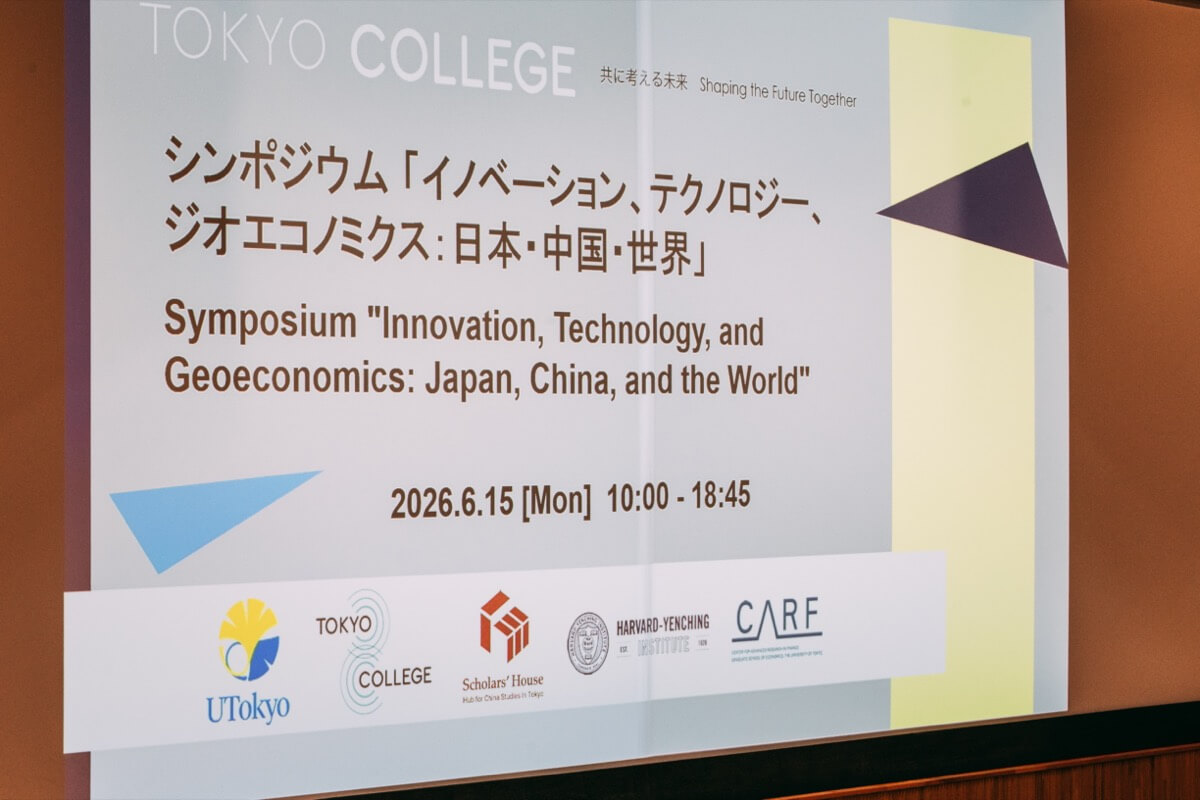
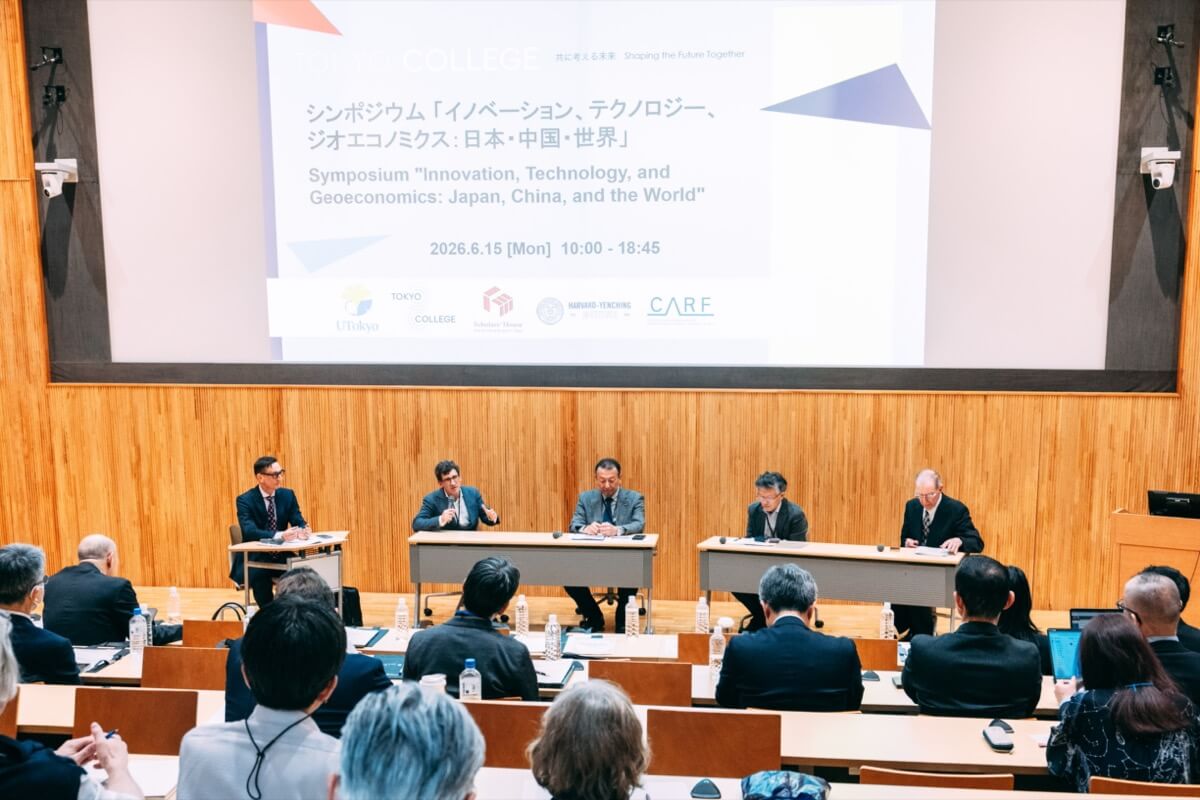
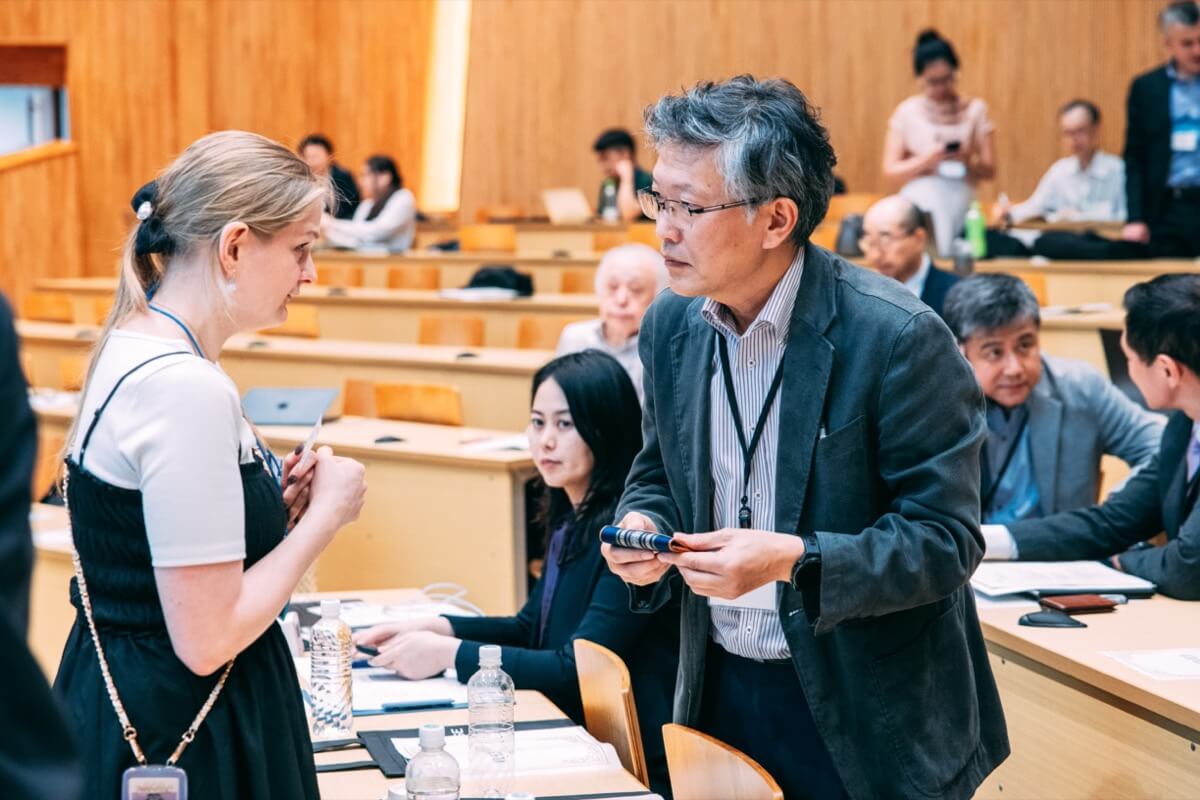
Entitled "Innovation, Technology, and Geoeconomics: Japan, China, and the World," the conference brought China economists and political scientists from around the world to Tokyo for an opportunity to view China's rise from the vantage point of neighboring Japan. The conference offered the visiting scholars a forum to exchange ideas with noted scholars of China from top Japanese universities and thinktanks. It also gave them a unique chance to talk with corporate executives and the government officials engaged in the actual formulation of Japan's policy response to China.
While there was a discussion of the historical roots of China's economic model, and its use of Japanese-inspired industrial policy to shape market outcomes to political goals, much of the dialogue was focused on current, real-world issues. One ironic outcome of China's dominance of key technological industries has been a push in Japan to return to industrial policy to build more diversified and resilient supply chains that don't depend on a single nation. These government interventions differ from Japan's past industrial policy by nurturing free-market solutions and cooperation with other nations that share its political and economic values.
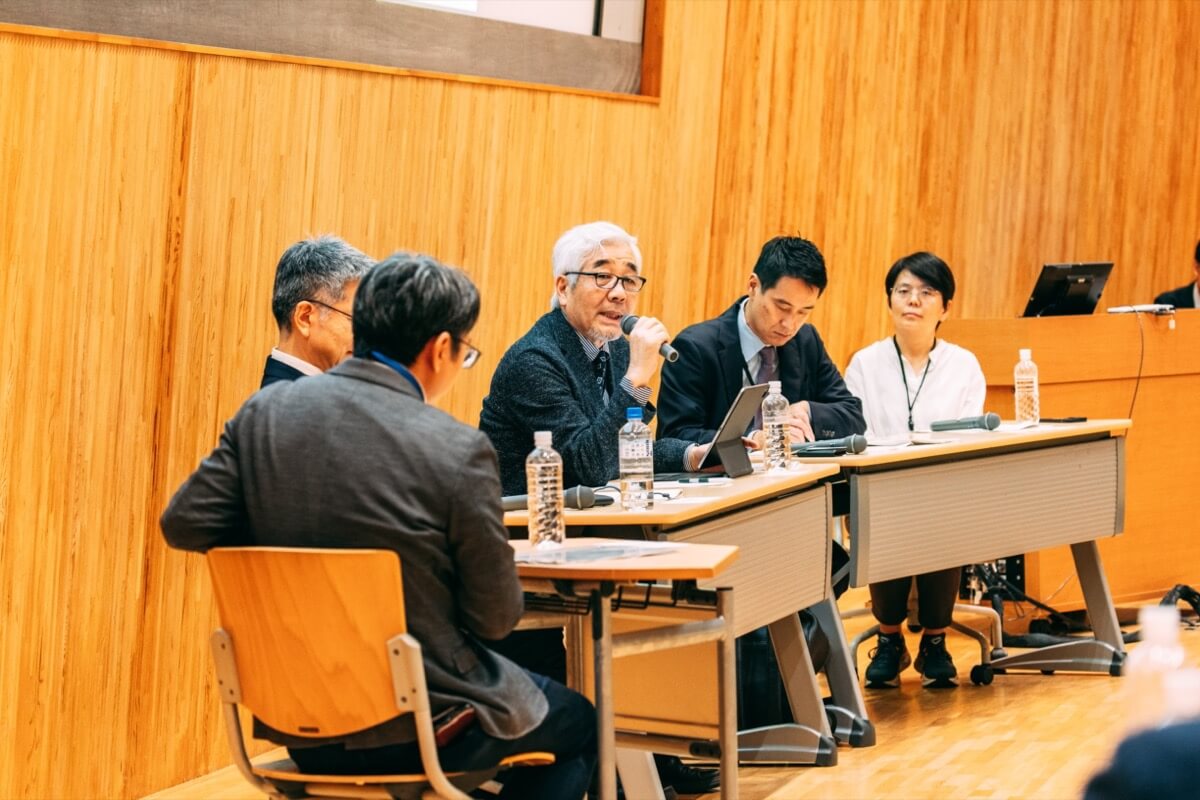
The conference consisted of four panels followed by a "fireside chat" (without the fireplace) with a top Japanese political leader. Wei Xiong of Princeton University helped frame the overall dialogue with his characterization of China's current economic model as "Mandarin Capitalism." This is a system of political economy whose roots go back to the old Imperial system, in which the political center in Beijing sets priorities that lower-level provincial governments implement by directing the actions of local companies. The result is a hybrid economic model in which markets and corporate competition are used to serve political goals.
China has built a hybrid model of industrial policy in which provincial governments are the main actors. This makes it harder to change.
Shaoda Wang of the University of Chicago pointed out that this system made use of industrial policy tools forged by Japan during that nation's earlier economic development in the 1950s and 1960s. It has produced some very similar outcomes, as Japan also rose to dominate high-tech industries during the 1980s. In both China and Japan, the use of industrial policy led to a strong supply-side bias that drove high levels of capital investment at the expense of wages and domestic consumption. As top-down investment built excess manufacturing capacity, both countries made use of exports as a "relief valve" to sell overseas the excess production that the domestic market could not absorb.
Hanming Fang of the University of Pennsylvania said the similarities ended there. He and the others described China as having created a more decentralized version of industrial policy in which provincial governments were the main actors. Operating within China's huge domestic market, they were often in competition with each other to bring job creation and investment to their own regions. The result is an unwieldy system that is actually harder to manage from the center, and that is thus more resistant to change.
This explains why China has clung to its model despite growing internal and external strains. Within China, the system has suppressed domestic living standards despite soaring unemployment and a housing market collapse. It has created friction with trade partners by churning out a glut of underpriced goods. In the words of Mariko Watanabe from Gakushuin University, "the success of industrial policy ended up harming the nation," while also leaving China with no clear exit strategy as its problems continue to mount.
According to Masakazu Toyoda, a former vice minister for international affairs at Japan's Ministry of Economy, Trade and Industry (METI), his nation scrapped its industrial policy after the 1990s, when Japan underwent an extended and painful adjustment of its industrial model. It built a more mature and balanced economic model by embracing liberalization and deregulation, aligning itself with the United States and other Western democracies. As Japan's economy shifted from manufacturing to services, a protracted stretch of deflation had the effect of lifting domestic living standards as store shelves were filled with inexpensive goods from China. During these "Lost Decades," the notion of industrial policy fell out of favor as a relic of the past.
More recently, however, concerns about industrial hollowing and over-dependence on China have prompted Japan to revisit the idea of using government policies to shape market outcomes. Japan has faced what some participants described as a "second China shock." The first was in the 2000s, when China has supplanted Japan in the production of commodity consumer goods. In this second shock, China has grown dominant in the advanced manufacturing that was once the pride of Japan. As China pulled ahead in key next-generation technologies like solar panels, electric vehicles and semiconductors and their supply chains, Japan at first held to its free market principles. But it got a wake-up call in 2010, when China used its control of the supply chain for rare earths -- metals essential for the production of electronics -- as leverage over Japan during a territorial dispute.
The shock of this incident forced Japan to return to industrial policy, starting with rare earths. Japan began a slow but steady effort to reduce its dependence on China, according to Tanaka Kazushige, the director-general of trade policy at METI. Over more than a decade, the Japanese government used market incentives to build an alternative supply chain of rare earths, which are now extracted in Australia and the United States and processed in Malaysia. While Japan still buys 70 percent of its rare earths from China, that figure is down from more than 90 percent a decade ago. That number will continue to fall as more productive capacity comes online. "Just give us more time," Tanaka told the audience.
In the 2010s, Japan returned to industrial policy by building an alternative supply chain for rare earths centered in Malaysia.
At the same time, recent events have exposed the limits of Japan's diversification strategy, said Yasuyuki Todo of Waseda University and Kenichi Doi of the Tokyo-based Institute of Geoeconomics. In particular, the U.S. and Israeli war on Iran has forced other nations like Japan to go in the opposite direction by becoming more reliant on China. To avoid the drastic energy shortages caused by the closure of the Strait of Hormuz, they have moved to increase use of non-fossil fuels. This has driven them closer to China, which produces most of the world's solar cells and the batteries for energy storage.
Such developments underscore a deeper reality about the global economy. Despite the talk of a new superpower rivalry, and "decoupling" from China by countries like Japan and the United States, this is not happening on the ground, said Noam Yuchtman of the London School of Economics. Instead, these countries have entered into a more complex interaction with China in which they take two contradictory stances, swinging between competing and collaborating with the Chinese technological behemoth.
Electric vehicles are a market that has seen more collaboration than competition, said Atsuki Tofukuji, the president of BYD Auto Japan, the Japanese subsidiary of the Chinese electric vehicle maker. EVs have been slow to catch on in Japan, but the number sold has been steadily growing. Last year, BYD sold 3,700 vehicles in Japan, up from 1,400 two years before that. While their number is small, Japanese buyers of EVs look favorably on the Chinese brands, according to Tofukuji, who said brand loyalties have not carried over from gasoline-powered cars. While BYD's market share remains tiny -- just 0.4 percent of car sales in Japan -- the company is already a market leader, setting consumer expectations about EVs both in prices and performance.
According to Richard Dyck of Japan's Industrial Partners and Tomoo Marukawa of the University of Tokyo, semiconductors have seen much more competition, to the detriment of the industry. Both Japan and the United States are trying to revive domestic chip production at a time when China is using all the levers of its industrial policy to catch up in the advanced chips used to power artificial intelligence. The result is a production glut in some categories of chips, as China alone has added twenty new manufacturers, each supported by different provincial governments. The resulting over-competition has led these companies to cannibalize markets with fierce price wars.
Competition also prevails in the field of AI, said Akira Kadomoto, director of the economic strategy division at the Ministry of Foreign Affairs. China and the United States are locked in battle to dominate this epoch-shaping technology, with the American ChatGPT, Claude and Gemini still out in front with Chinese rivals like DeepSeek on their heels. Other nations have felt compelled to choose sides, selecting the lesser of two evils. Japan has sided with American AI models, despite concerns of surrendering data to U.S. tech giants. At the same time, there are those who favor the Chinese models, which are both a fraction of the cost and open-sourced. While Japan and other nations would actually prefer having more sovereign control, a third option has yet to emerge.
The choice to side with the United States on AI reflects Japan's broader strategy of allying itself with "likeminded" democracies, said Akio Takahara on Tokyo Woman's Christian University. With the global economy appearing increasingly divided into U.S. and Chinese-dominated spheres, Japan has opted to join the former out of national security concerns. However, Beijing has sought to pry Tokyo away from Washington by using both the carrot of economic incentives and the stick of diplomatic intimidation. Takahara called this effort to slowly separate the allies "a salami-slicing strategy."
This competition has had negative social and economic consequences for all countries involved, said Ruixue Jia of the University of California, San Diego. Some areas that have suffered are academic exchange and joint scientific research. The number of collaborative research projects involving U.S. and China-based scholars have plummeted since their peak in 2018. The same thing has happened in Japan, where joint research with China has fallen into decline since 2019.
Ted Tokuchi, a former China-based finance executive who is now a senior fellow at the Asia Pacific Initiative, said China has alienated many in Japan by using its economic advantages against their nation, mostly recently after the current Japanese prime minister spoke about Taiwan. However, such pressure tactics have backfired, driving Japan to take further measures to reduce reliance on Chinese industry and supply chains. Yet despite the political tensions, trade continues to flourish between the two neighboring Asian economic giants. So does investment, with 28,000 Japanese companies now doing business in China -- three times as many as have a presence in the United States. With its domestic economy slowing down, China needs the Japanese business presence more than ever. "There is no decoupling," Tokuchi said.
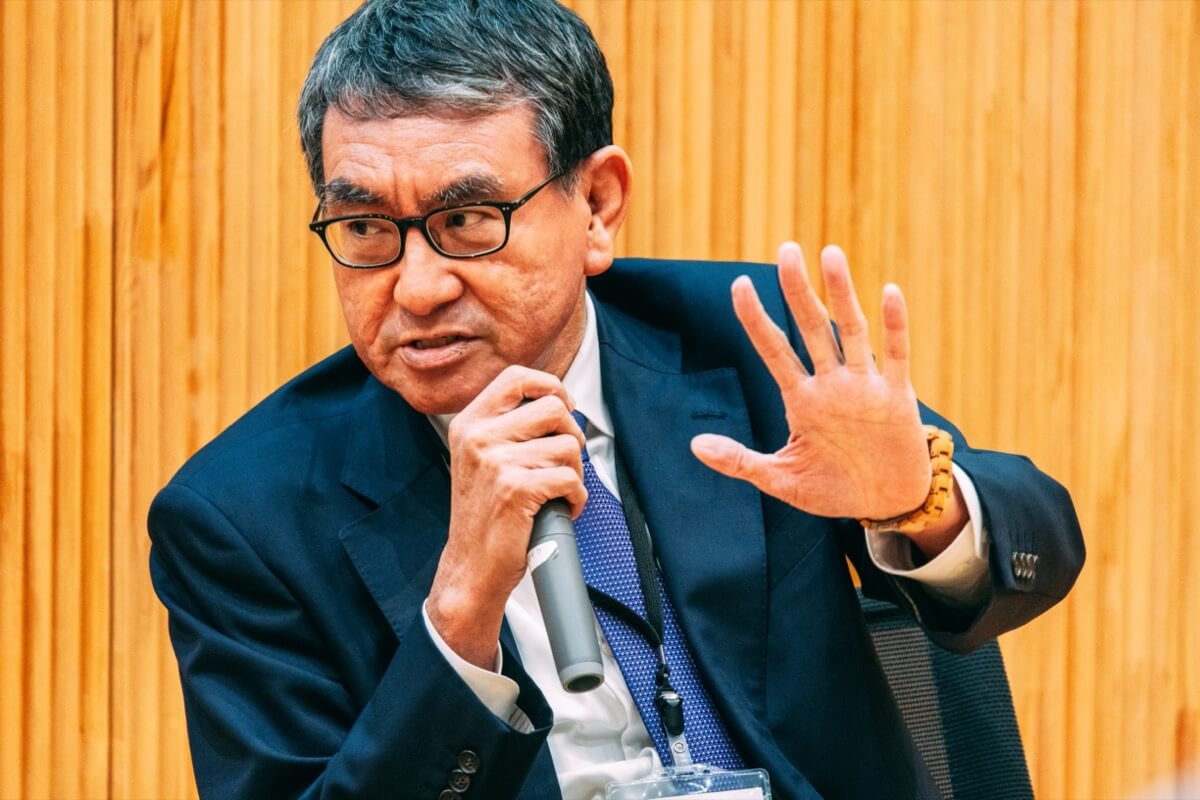
While Japan is talking once again about industrial policy, it has no intention of going back to past. This was the view of the final speaker of the conference, Kono Taro, a parliamentarian of the governing Liberal-Democratic Party and former minister of digital innovation as well as of defense and foreign affairs. In a fireside chat with Michael Song of the Chinese University of Hong Kong, Kono said that Japan needed to emulate China by becoming nimbler in pursuing the latest innovations in AI and other fields, but it couldn't do this with a return to old-school industrial policy.
Instead, he said Japan needed to go in the opposite direction of unleashing the creative destruction of capitalism. While implementing such structural reforms as liberalizing the labor market were politically difficult, they are needed to ensure Japan remains a leading economy. Song also led the conversation into the topics of macroeconomic and education policies, with Kono, who spoke fluent English, calling for more English-language instruction at Japan's universities to attract foreign students.
Re-energizing growth would also serve Japan's geopolitical goals by allowing it to demonstrate more economic and technological autonomy, Kono said. While Japan could no longer depend on China as a supplier of vital materials like rare earths, the protectionist turn in Washington meant it could no longer blindly trust the United States, either. "I don't feel comfortable relying on the United States," he said. "President Trump could do anything tomorrow."
Instead, Japan would have to seek closer ties with "likeminded third countries" -- capitalist democracies in Asia and Europe with whom it could hedge its bets by building more cooperation. A more vibrant and innovative economy would also allow Japan to build healthier ties with the United States, on which it still must rely for its defense. By strengthening its own military capabilities and industrial base, Japan could keep the Americans engaged by becoming an essential ally in Washington's eyes. Kono said Japan cannot afford to decouple with China, either, given the size of the Chinese economy and its dominance of key technologies. A reinvigorated Japan would also be on a more equal footing with China as well, giving Beijing more reason to see Tokyo as a valuable economic partner. "Japan and China cannot not talk to each other," he said.